Winter ’26 brings a wave of new capabilities to Marketing Cloud (Next, Engagement, Account Engagement), especially around AI content, channels, data integration, and sandbox support. Here are the highlights:
1. Marketing Cloud Next Becomes Sandbox-Ready (with caveats)
- You can now test Marketing Cloud Next features in a sandbox (non-production) environment.
- Limitation: Not all features are supported in sandbox. In particular, Mobile App Messaging Content is not available in sandbox.
- Also, usage (credits, etc.) is still consumed even in sandbox/test mode. This gives marketers a safer environment to experiment, build automations, and validate campaigns before pushing changes live.
2. AI-Powered Content: Content Builder Agent + Smarter Templates & Blocks
- The Content Builder Agent is introduced: a generative-AI assistant that helps draft and optimize email subject lines, SMS bodies, and general copy.
- You can configure the agent’s “role/voice” through the Agent Builder template.
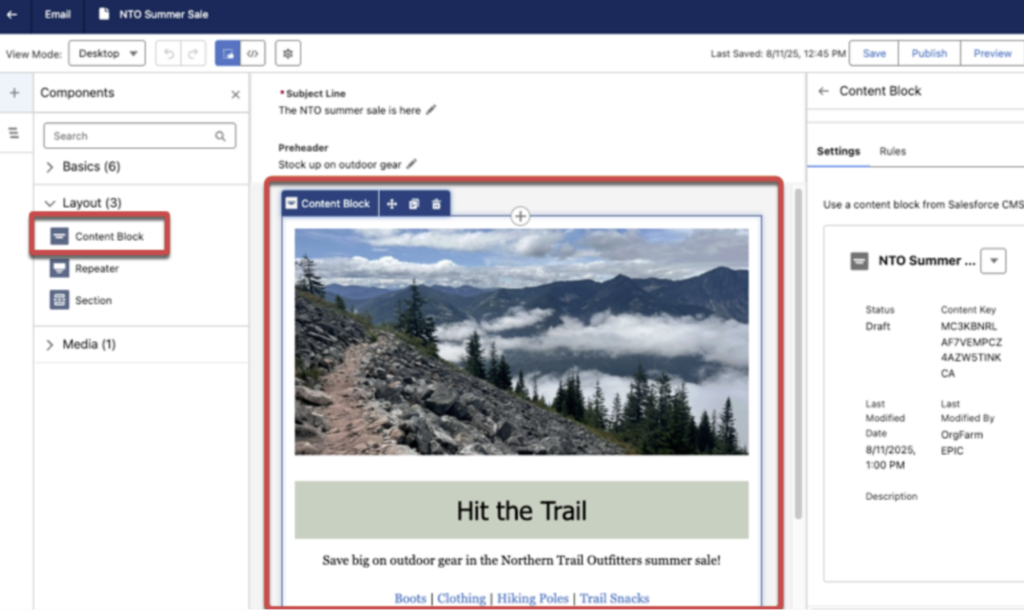
- Reusable content blocks and email templates are enhanced. Marketers can store standard items (headers, footers, compliance text, etc.) in a shared workspace and drag them into new emails.
- More control over data sources for personalization: you can replace the default data graph, delete event data sources, and manage dynamic content more flexibly.
These changes reduce repetitive work and give more consistency and governance over brand voice and content reuse.
3. Smarter Forms & Landing Pages (less code, better UX)
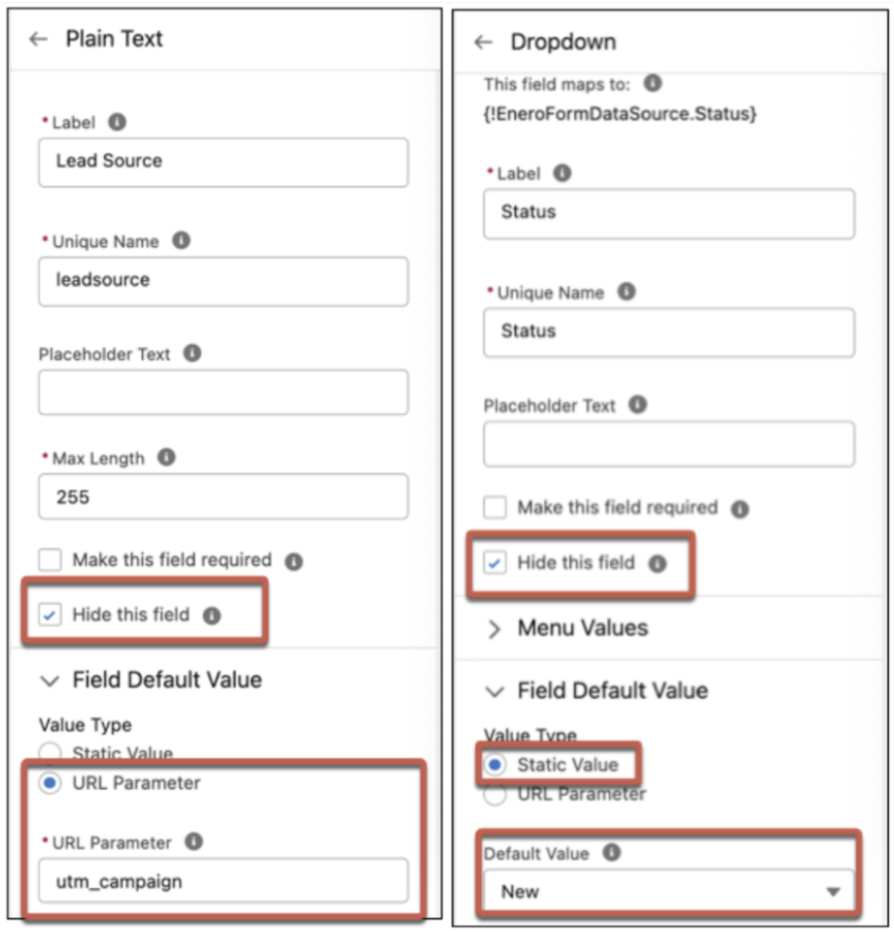
- Hidden fields, default values, and URL-parameter prepopulation let you collect data without cluttering the UX.
- Form Handlers are improved: external web forms can map directly to Salesforce objects, and trigger Flows (automations) without custom code.
- Merge fields and additional HTML / template flexibility for landing pages (so you can personalize pages dynamically).
This empowers marketers to build forms/landing pages with advanced behavior while reducing dependence on developers.
4. Enhanced WhatsApp / Messaging Channels
- WhatsApp support gets stronger: interactive messages with CTAs, location sharing, rich media carousels, and more.
- New click rate and open rate metrics for WhatsApp become available in Insights.
- You can now send time-sensitive offers with auto expiry and define blockout windows (times when messages shouldn’t go out) for WhatsApp.
- The Marketing Meta Lite APIs are accessible, extending programmatic control.
These updates push WhatsApp beyond simple messaging to a fully capable campaign channel.
5. Engagement Performance, Analytics & Governance
- Query Activity Optimizer is added: it gives performance scores and suggestions to improve SQL queries.
- Audit Trail enhancements: better tracking of package/component changes and Automation Studio activities.
- The integration of Marketing Cloud Next features into Engagement: Flow, Campaigns, Digital Wallet tracking, and Agentforce features are being brought into the Engagement UI. Rollout is staggered (some features are live, others coming).
- Deliverability Dashboard filters: new filters by domain type (Gmail, Hotmail, etc.) and message type (promotional vs transactional) in the deliverability view.
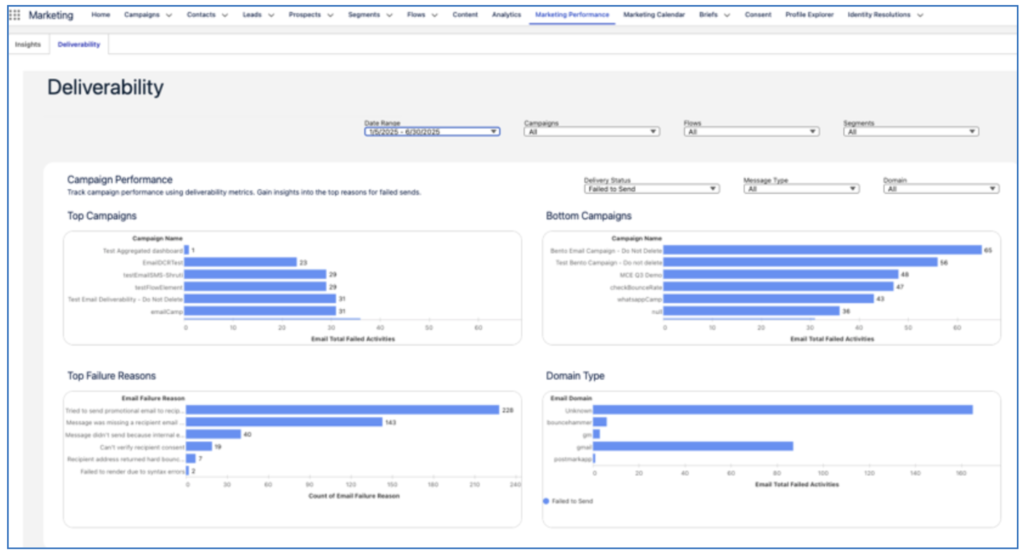
- Advanced Insights / Engagement Insights enhancements: new visualizations, ability to spot top segments, and custom metric formula support.
These tools are meant to help admins and marketers keep a tighter eye on performance and compliance.
6. Account Engagement & Data Cloud Integration Enhancements
- A new Data Kit package ships that includes essential Data Cloud metadata for Account Engagement (formerly Pardot).
- Third-party form engagement data (via form handler submissions) can flow into Data Cloud, enriching segmentation and reporting.
- Dynamic lists sync across companion orgs via Data Cloud One, helping break down org silos and letting data flow across business units.
These features deepen the connection between marketing data and enterprise data infrastructure.